

Seated trunk rotation against resistance band
The seated trunk rotation against a resistance band targets back and core muscles, enhancing rotational strength and control. Ideal for athletes, golfers, cricketers, individuals with back discomfort, and anyone aiming to improve core stability, this exercise builds resilience in the spine and promotes balanced movement.
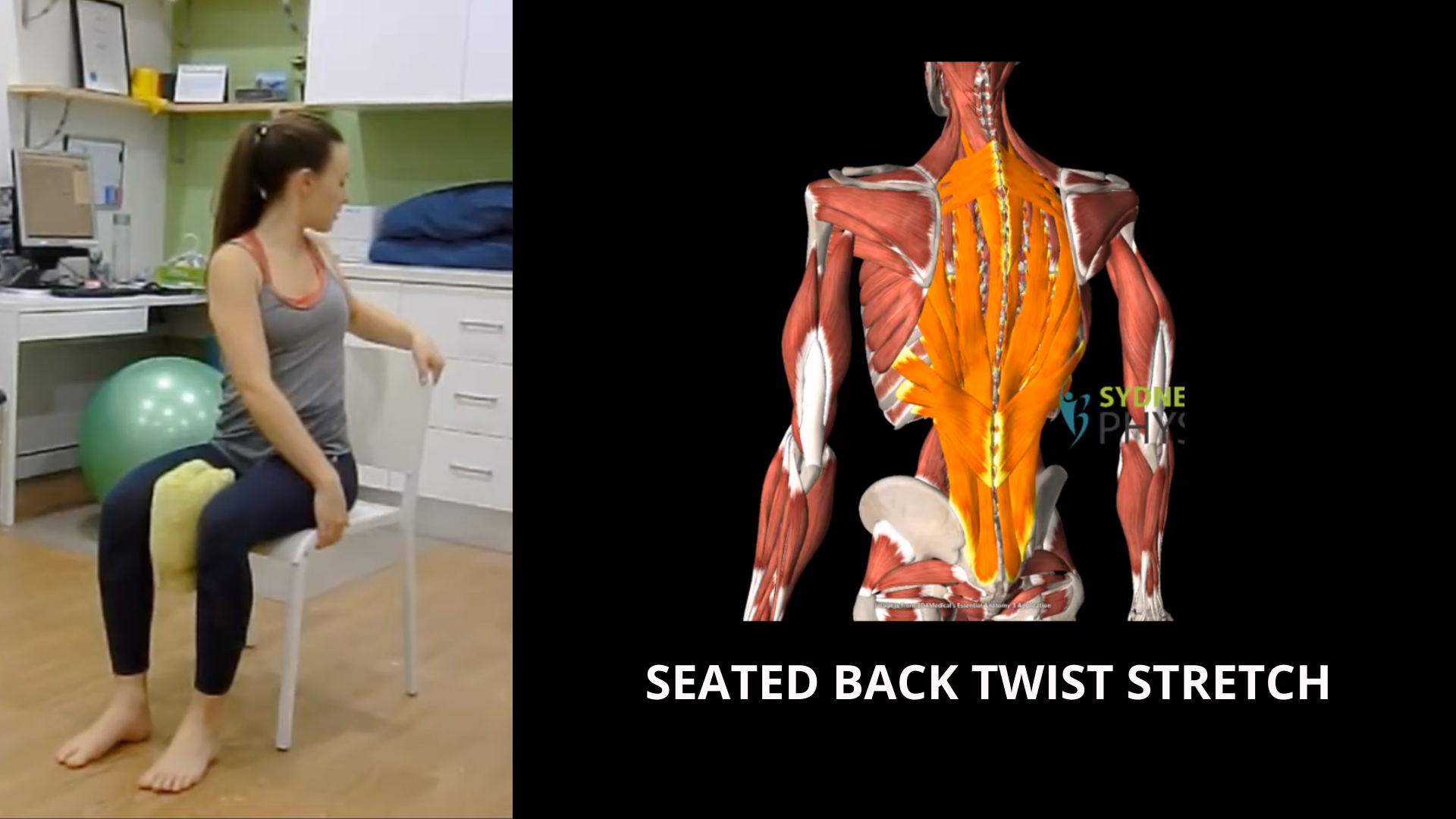
Seated back twist stretch
The seated back twist stretch relieves tension and improves mobility in the spine, making it ideal for office workers who sit for extended periods. This stretch promotes spinal flexibility, reduces stiffness, and supports better posture, helping you feel more comfortable throughout the day.


Ball hamstring bridge and roll
The hamstring bridge on a gym ball strengthens the hamstrings and glutes, crucial for stability and injury prevention in soccer players. This exercise is ideal for rehabbing and conditioning, promoting hamstring resilience, balance, and power essential for peak performance on the field.
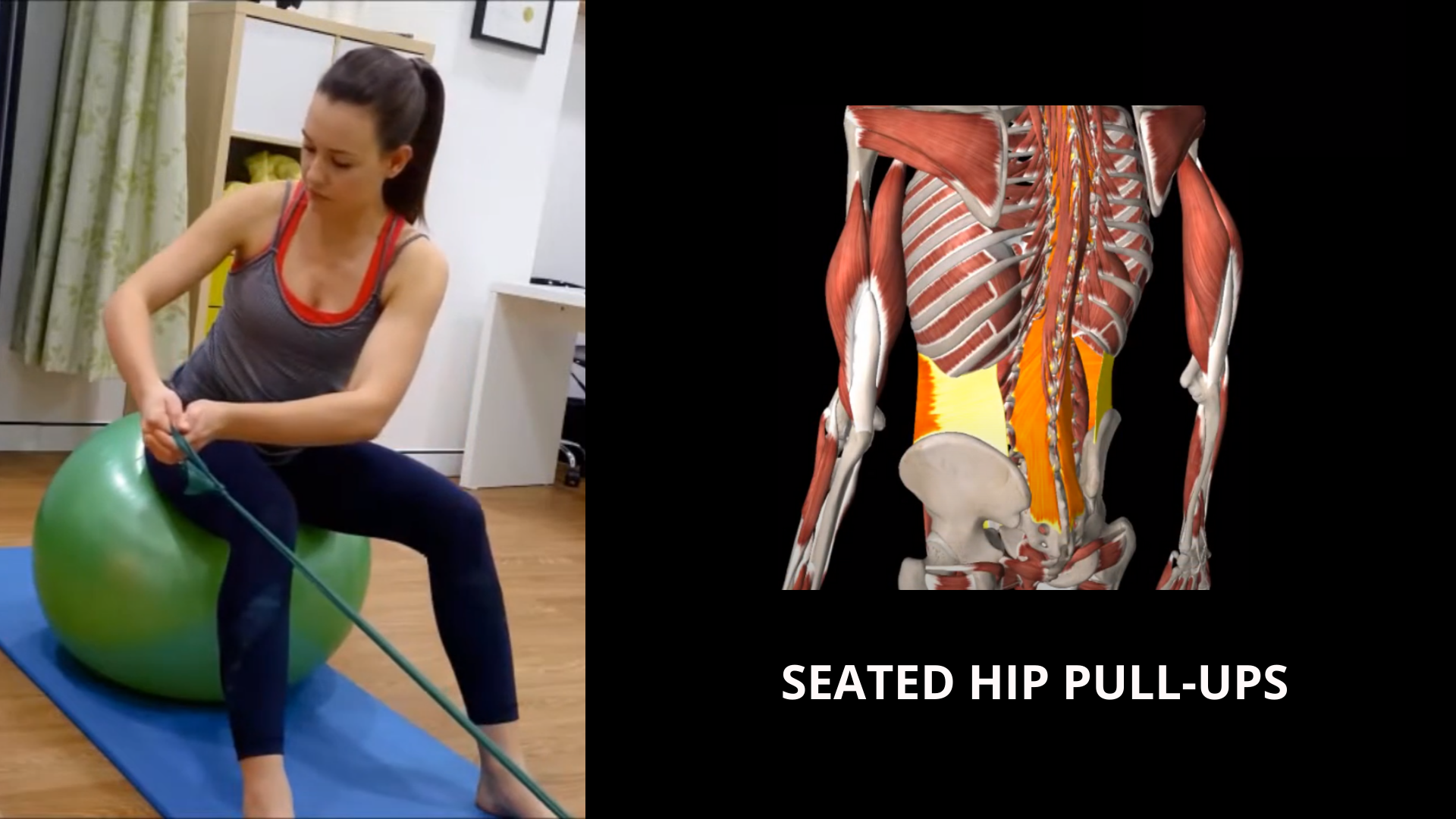
Seated hip pull-ups
The seated-on-ball pull-ups against a resistance band exercise targets back and hip strength, making it effective for rehabilitation. Ideal for improving stability and control, this movement supports back alignment, strengthens hip muscles, and enhances core engagement for a balanced recovery.


Seated knee raise
The seated knee extension exercise targets the quadriceps, helping to relieve pain in the front of the knee. Ideal for individuals with knee discomfort or those in rehab, this movement strengthens knee support, promotes alignment, and aids in reducing strain on the patellar tendon.

Lunge forward trunk turn
Lunges with trunk rotation while holding a ball enhance knee and back coordination, promoting stability and control. Ideal for building lower body strength and core engagement, this exercise supports knee alignment, improves balance, and strengthens rotational movement for a well-rounded functional workout.

Ball Squeeze heel raise
Calf raises with an object squeeze activate the calf muscles while enhancing ankle stability, making it excellent for foot and ankle injury recovery. This exercise improves balance, strengthens the lower leg, and promotes proper alignment, supporting a strong foundation for daily movement and athletic activities.

Neck turning laying down
The neck-turning exercise in a lying-down position gently relieves stiffness from wry neck and serves as an initial movement for whiplash recovery. This light exercise promotes neck mobility, eases muscle tension, and supports gradual improvement in range of motion, ideal for early-stage rehabilitation.

Shoulder pull up
The shoulder pull-up against a resistance band is designed for the final stage of shoulder pain recovery, enhancing strength and stability. This exercise builds shoulder endurance, supports full range of motion, and promotes balanced muscle activation, preparing the shoulder for return to regular activity.
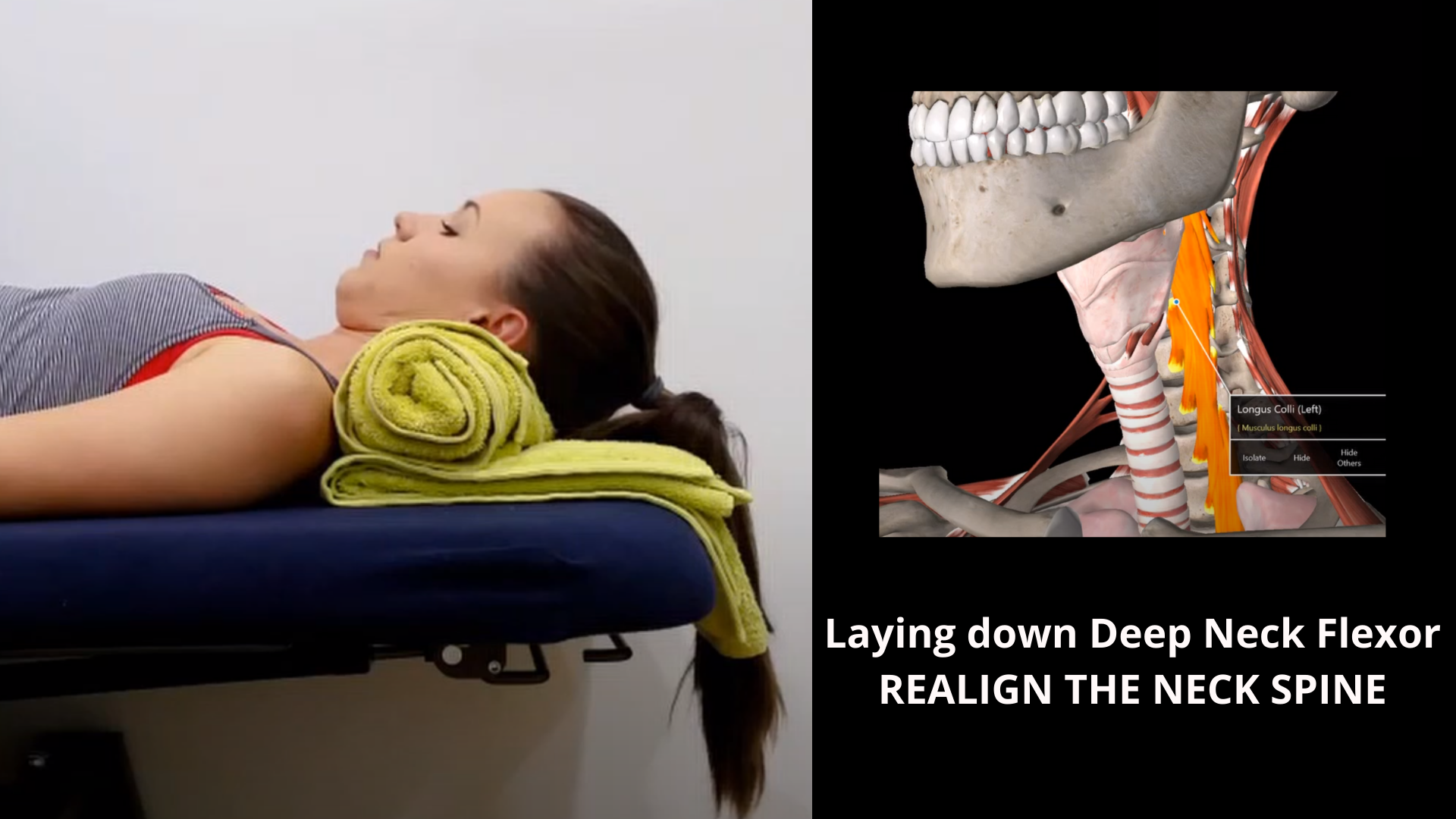
Laying down Deep Neck Flexor
The deep neck flexor activation exercise with chin tucks in supine gently engages the neck muscles, making it ideal for the beginning stage of whiplash recovery. This exercise promotes neck stability, relieves tension, and supports a gradual improvement in neck control and alignment.

Arch inducing squat
Arch-inducing squats target foot muscles to support arch formation, making them beneficial for treating plantar fasciitis and flat feet. This exercise promotes foot stability, reduces strain on the plantar fascia, and helps prevent foot pain, providing a strong foundation for improved lower body alignment.

Eccentric heel lowering
The heel-lowering exercise on a stair step gently elongates the calf muscle, promoting flexibility and supporting recovery from Achilles tendinitis. This exercise reduces tension in the Achilles tendon, enhances calf strength, and aids in healing by gradually improving tendon resilience and mobility.

Lateral step ups
Lateral step-ups target the quadriceps while enhancing pelvic tilt control, making them ideal for building lower body strength and stability. This exercise supports balanced leg strength, improves hip alignment, and promotes better control over pelvic positioning, which is essential for functional movement and posture.

Ankle inversion strengthening
The seated ankle inversion exercise strengthens the ankle’s stabilising muscles, making it ideal for preventing injuries in court and field-based sports. This exercise improves ankle stability, supports better balance, and helps reduce the risk of sprains, providing a strong foundation for dynamic athletic movements.

Seated heel raise
The seated heel-raise exercise is a gentle movement designed for the early stages of Achilles tendon rehabilitation. This light exercise activates the calf muscles, promoting blood flow and gradual strength building, supporting safe and effective recovery of the Achilles tendon.
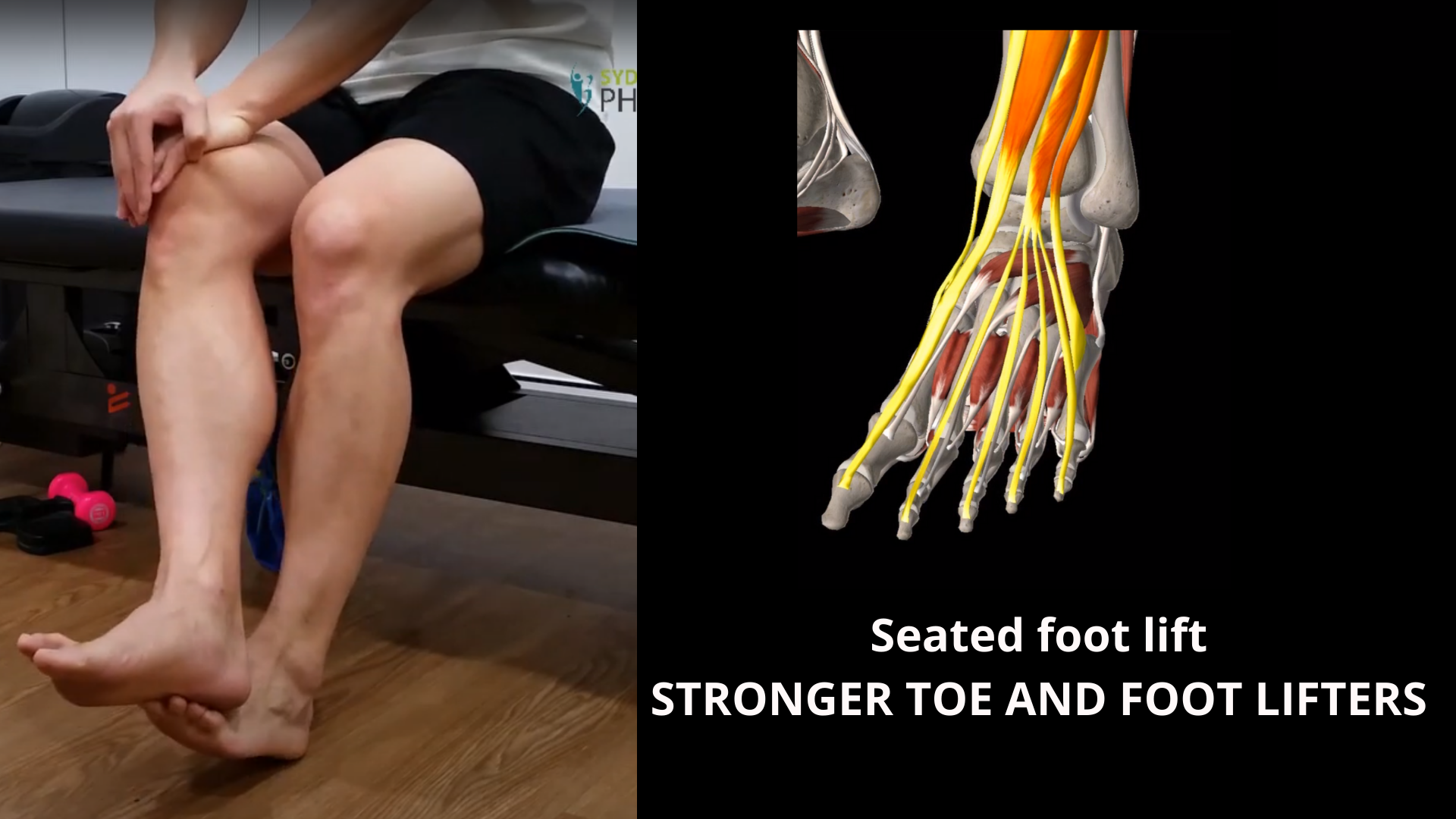
Seated foot lift
The seated toe-lift exercise targets the muscles at the front of the ankle, enhancing stability and control. This exercise is ideal for improving ankle strength and balance, supporting better movement mechanics, and reducing the risk of ankle-related injuries.

Romanian hamstring dip
The single-leg Romanian deadlift strengthens the hamstrings, glutes, and core while improving balance and stability. Ideal for building lower body strength and enhancing hip control, this exercise promotes proper movement mechanics, reduces injury risk, and supports athletic performance in dynamic activities.

Ankle resisted eversion
The ankle evertor strengthening exercise with a theraband targets the outer ankle muscles, essential for preventing ankle sprains. This exercise improves ankle stability, enhances lateral control, and builds resilience, making it ideal for individuals prone to ankle injuries or those looking to boost lower limb stability.