

Eccentric heel lowering
The heel-lowering exercise on a stair step gently elongates the calf muscle, promoting flexibility and supporting recovery from Achilles tendinitis. This exercise reduces tension in the Achilles tendon, enhances calf strength, and aids in healing by gradually improving tendon resilience and mobility.

Lateral step ups
Lateral step-ups target the quadriceps while enhancing pelvic tilt control, making them ideal for building lower body strength and stability. This exercise supports balanced leg strength, improves hip alignment, and promotes better control over pelvic positioning, which is essential for functional movement and posture.

Ankle inversion strengthening
The seated ankle inversion exercise strengthens the ankle’s stabilising muscles, making it ideal for preventing injuries in court and field-based sports. This exercise improves ankle stability, supports better balance, and helps reduce the risk of sprains, providing a strong foundation for dynamic athletic movements.

Seated heel raise
The seated heel-raise exercise is a gentle movement designed for the early stages of Achilles tendon rehabilitation. This light exercise activates the calf muscles, promoting blood flow and gradual strength building, supporting safe and effective recovery of the Achilles tendon.
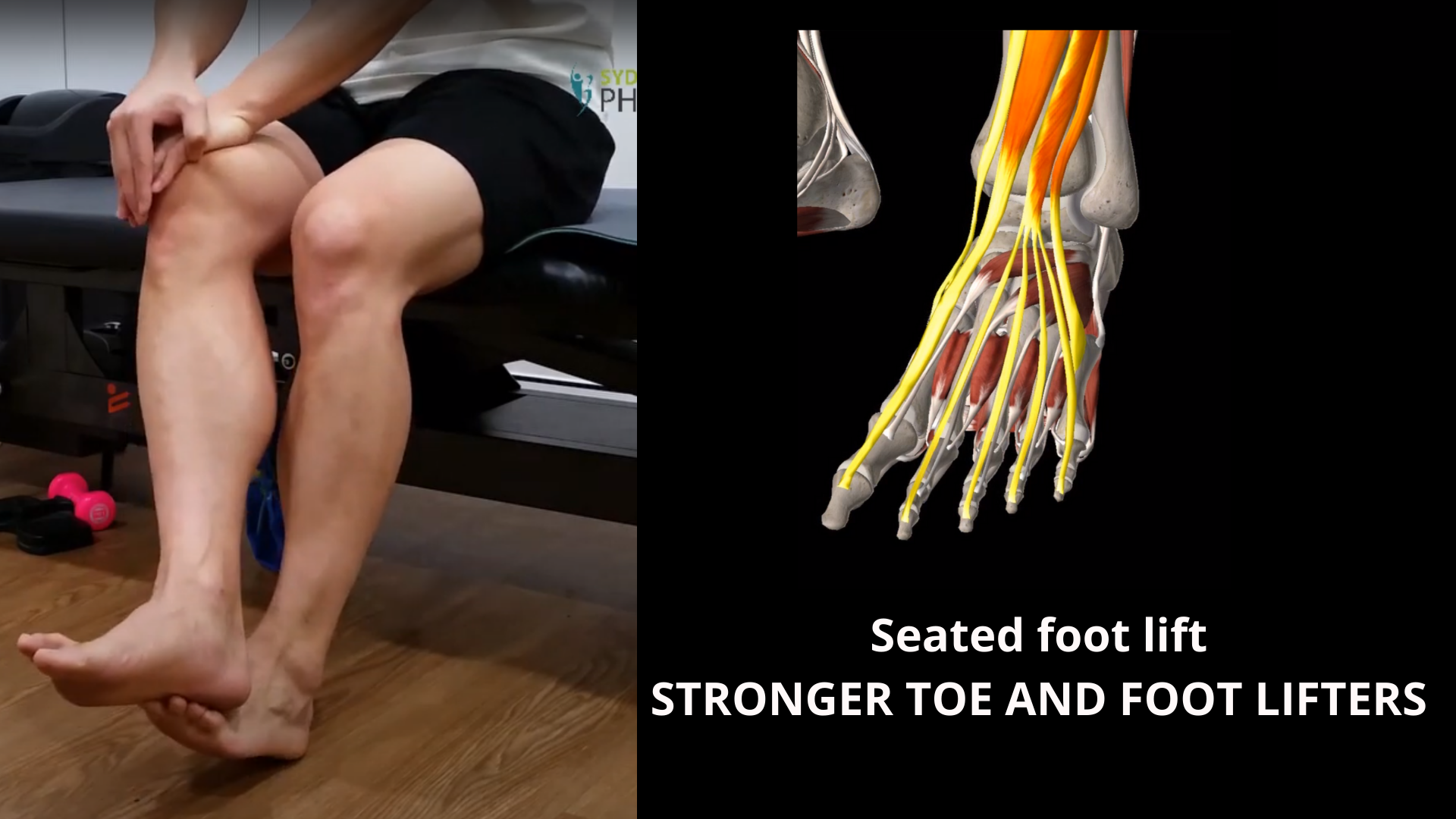
Seated foot lift
The seated toe-lift exercise targets the muscles at the front of the ankle, enhancing stability and control. This exercise is ideal for improving ankle strength and balance, supporting better movement mechanics, and reducing the risk of ankle-related injuries.

Romanian hamstring dip
The single-leg Romanian deadlift strengthens the hamstrings, glutes, and core while improving balance and stability. Ideal for building lower body strength and enhancing hip control, this exercise promotes proper movement mechanics, reduces injury risk, and supports athletic performance in dynamic activities.

Ankle resisted eversion
The ankle evertor strengthening exercise with a theraband targets the outer ankle muscles, essential for preventing ankle sprains. This exercise improves ankle stability, enhances lateral control, and builds resilience, making it ideal for individuals prone to ankle injuries or those looking to boost lower limb stability.

Trunk rotation stretch
The trunk rotation stretch in the supine position gently releases upper back tension, promoting flexibility and relaxation along the spine. Ideal for relieving stiffness and improving rotational mobility, this stretch supports better posture and reduces upper body discomfort.

Resistance band behind the head pull
The resistance band behind-the-head pull exercise activates postural muscles, helping improve posture by increasing muscle tone and stability in the upper back and shoulders. This exercise supports better alignment, reduces slouching, and promotes a strong, upright posture, making it ideal for combating the effects of prolonged sitting.

Resistance band shoulder retraction
The resistance band shoulder retraction exercise targets the upper back and shoulder muscles, helping to alleviate neck and upper back pain and stiffness caused by prolonged computer use. By strengthening postural muscles, this exercise rebalances your posture, promoting alignment and reducing tension.


Is your desk job causing you neck, back and shoulder pain?
Neck posture & ergonomics for office workers.

Pelvic floor health in women resolves complications
Pelvic floor conditions in women’s health


What is mastitis?
Physiotherapy treatment for mastitis - the condition of blocked milk duct commonly seen in breastfeeding mothers. Ultrasound treatment is commonly used, along with heat and therapeutic massage.


ITB syndrome in long-distance runners and walkers
Ilio-tibial band injury and side-knee pain seen in runners. The involvement of hip and pelvis alignment in running is important.
